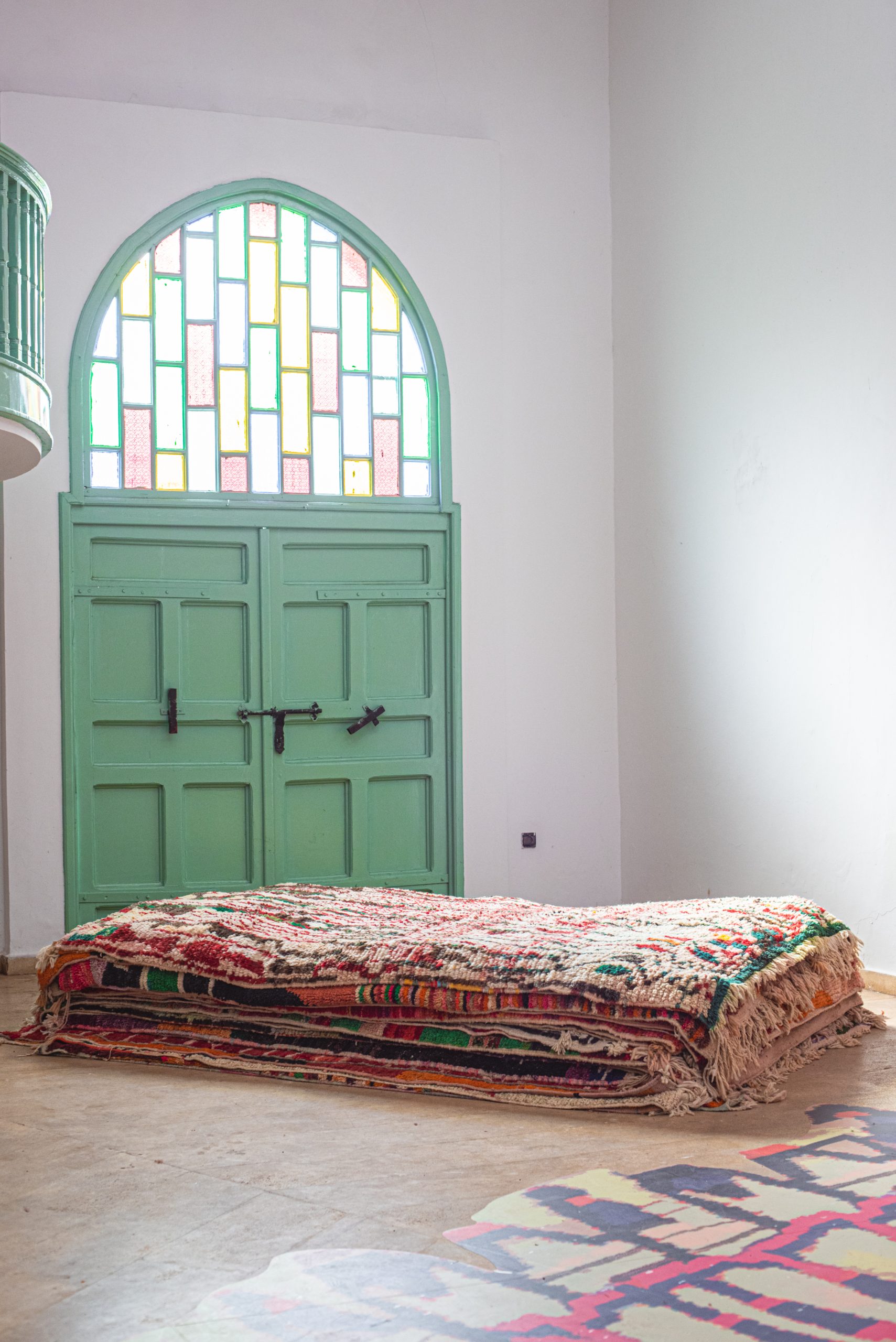
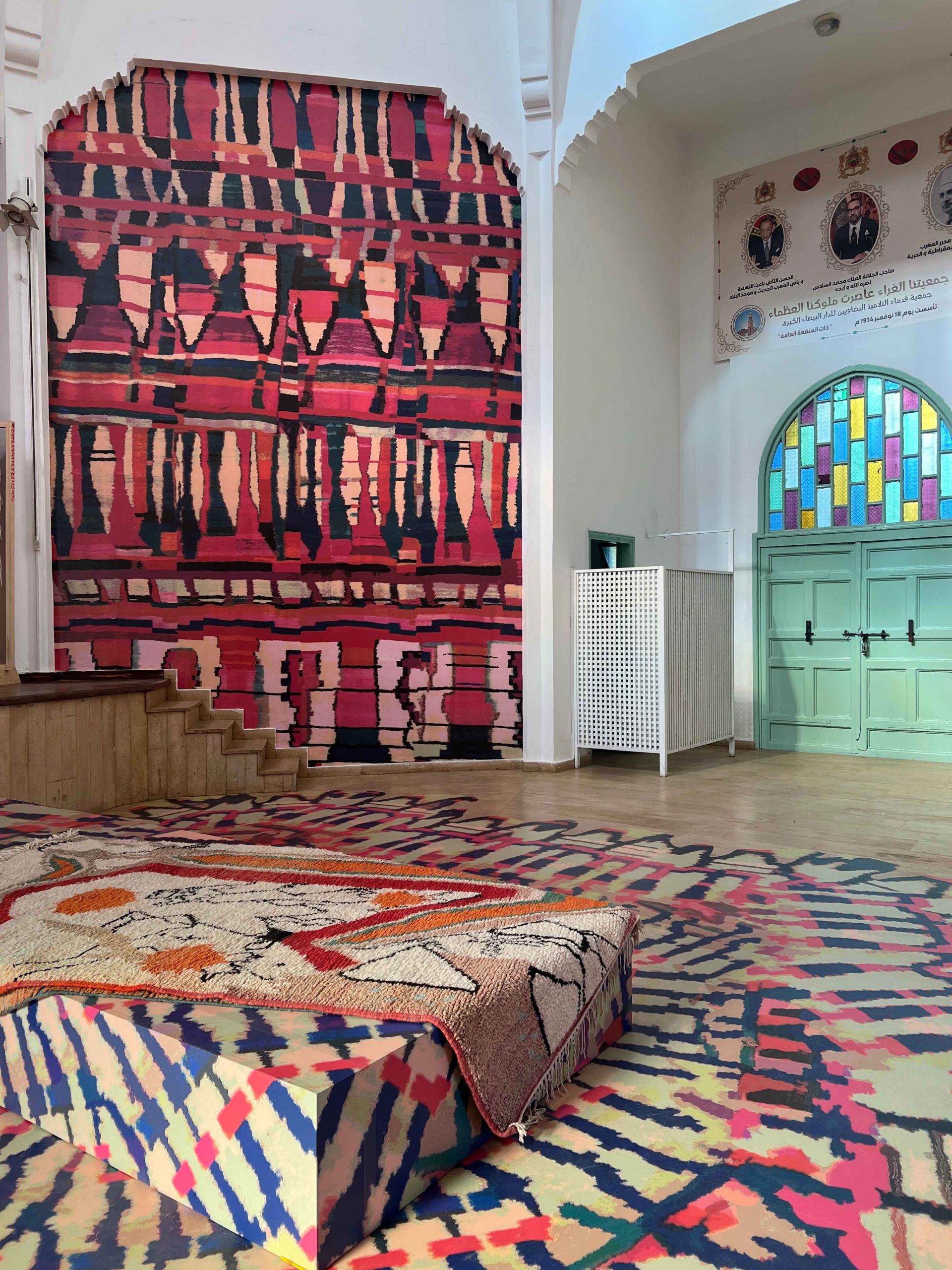
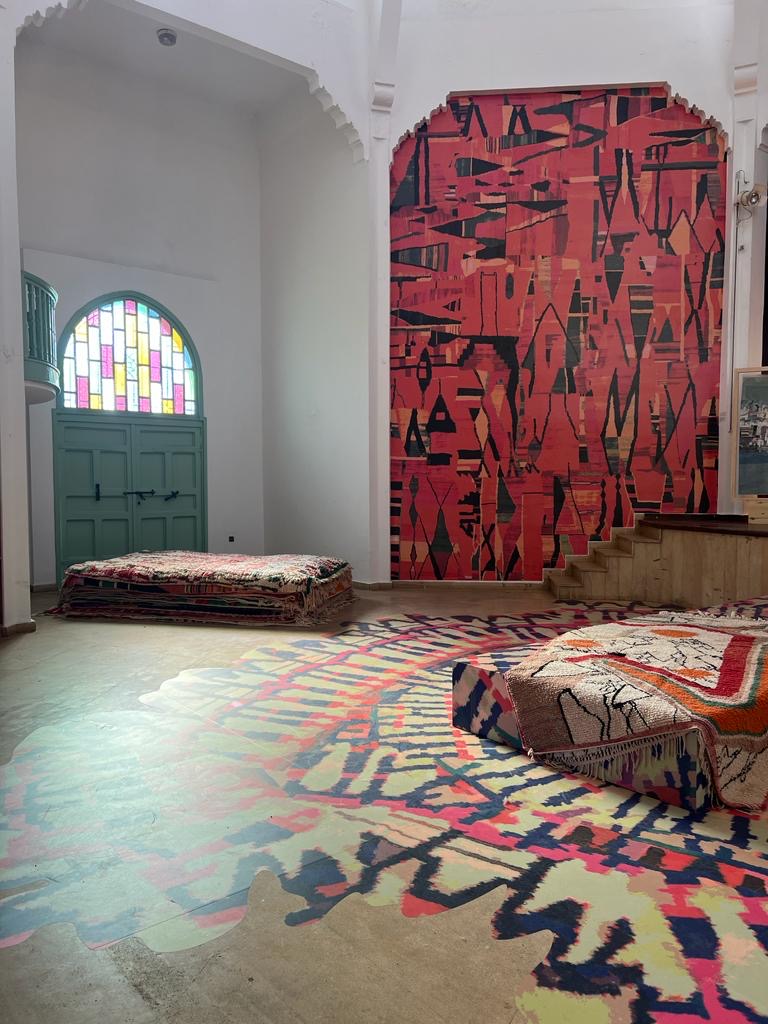
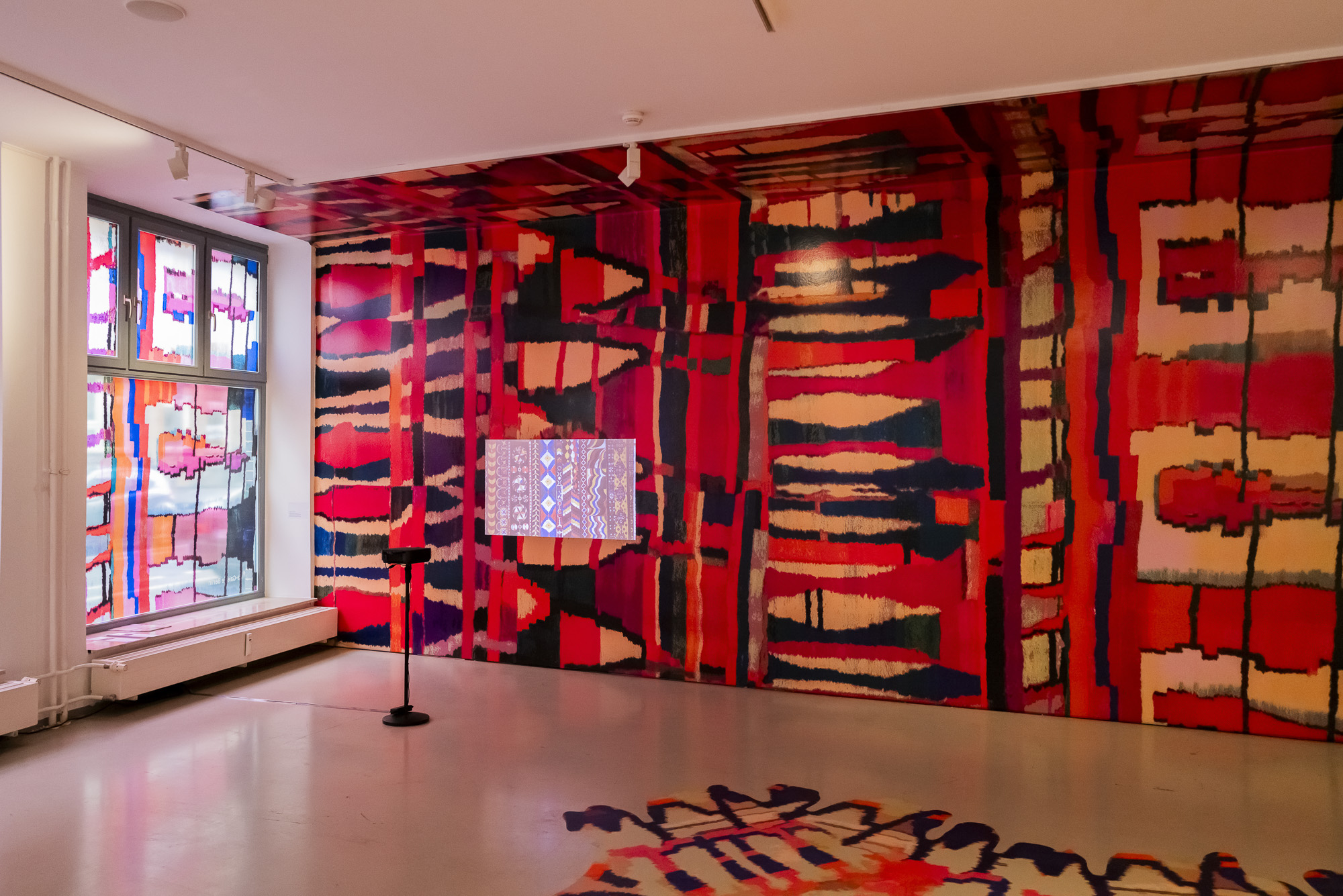
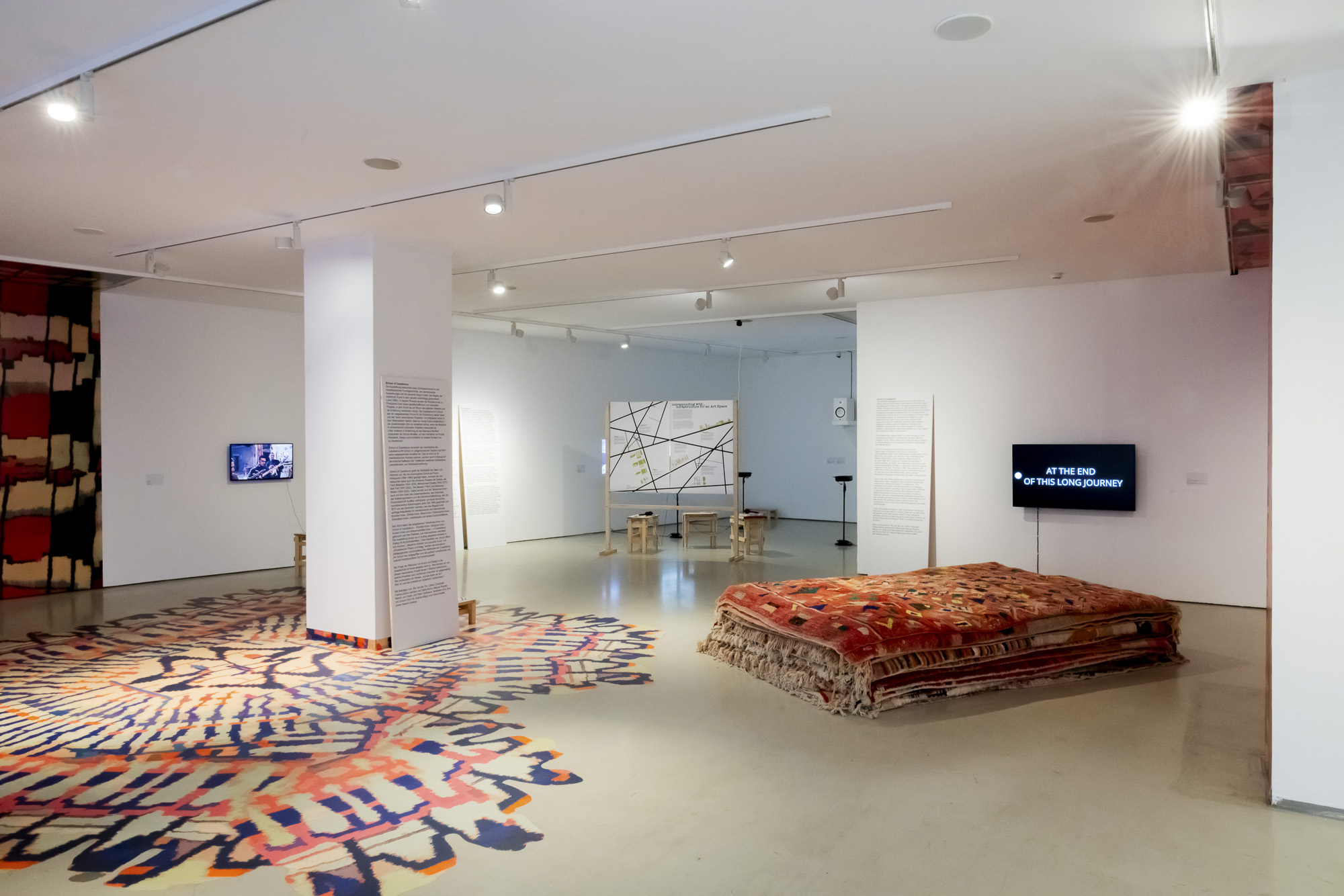
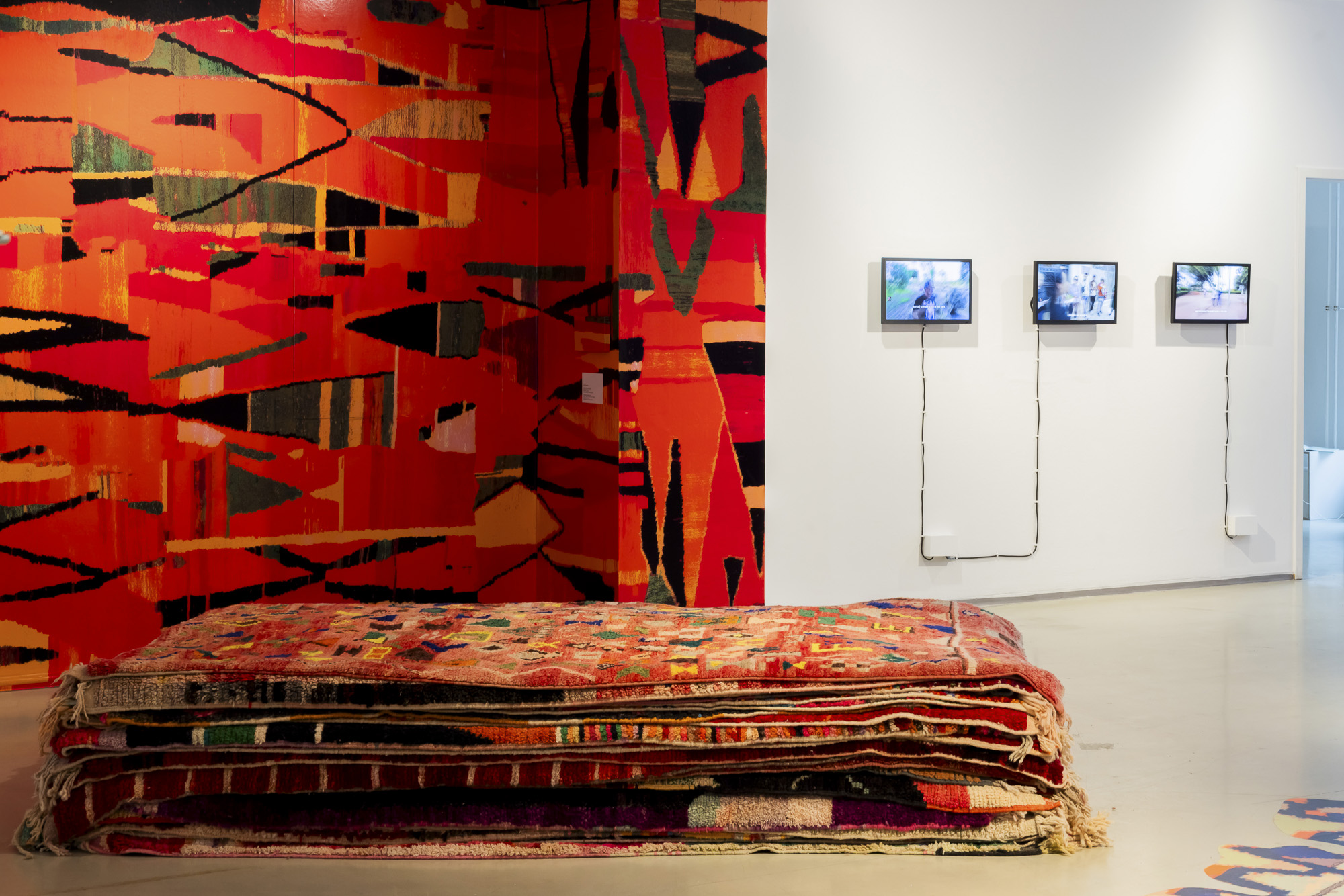
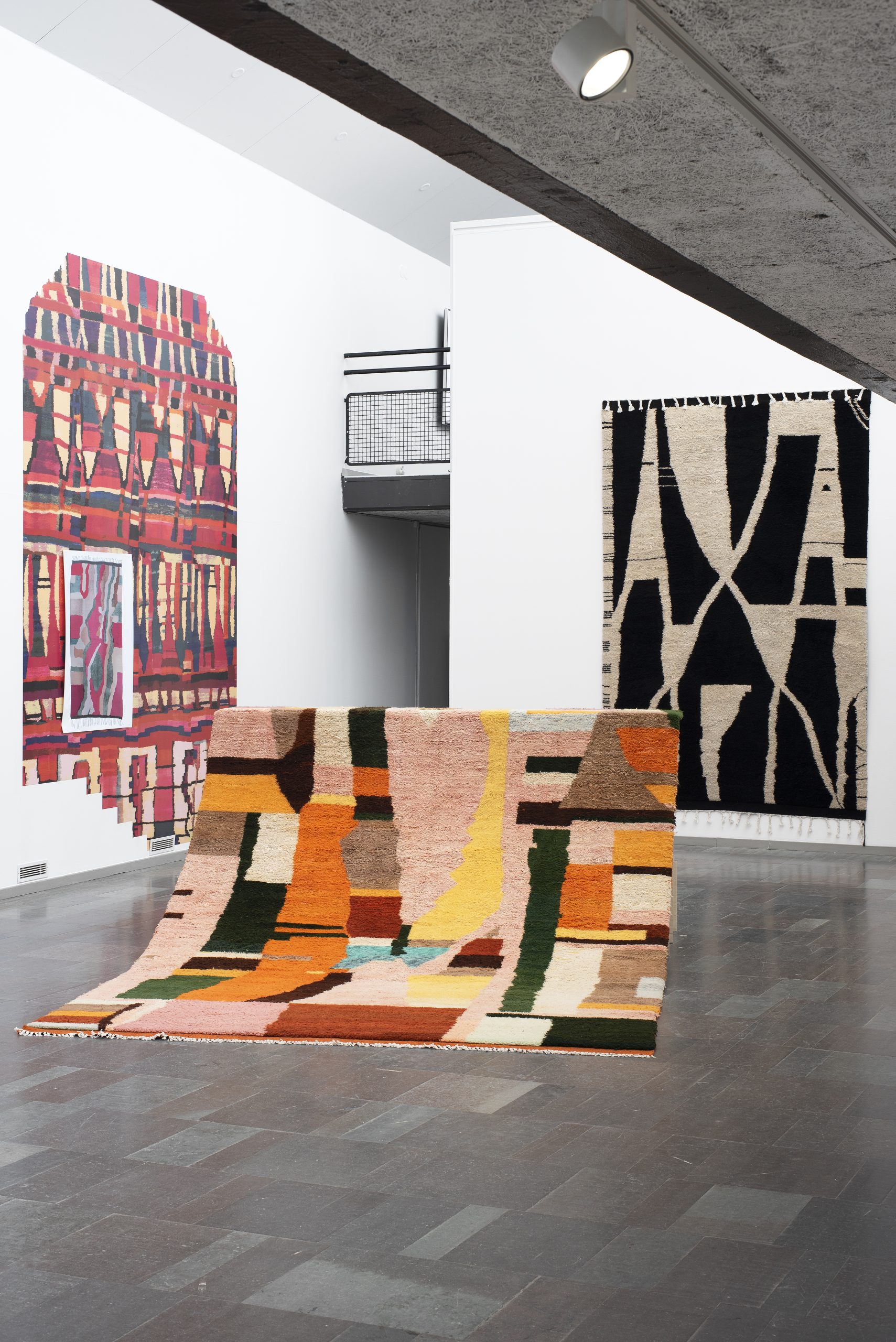
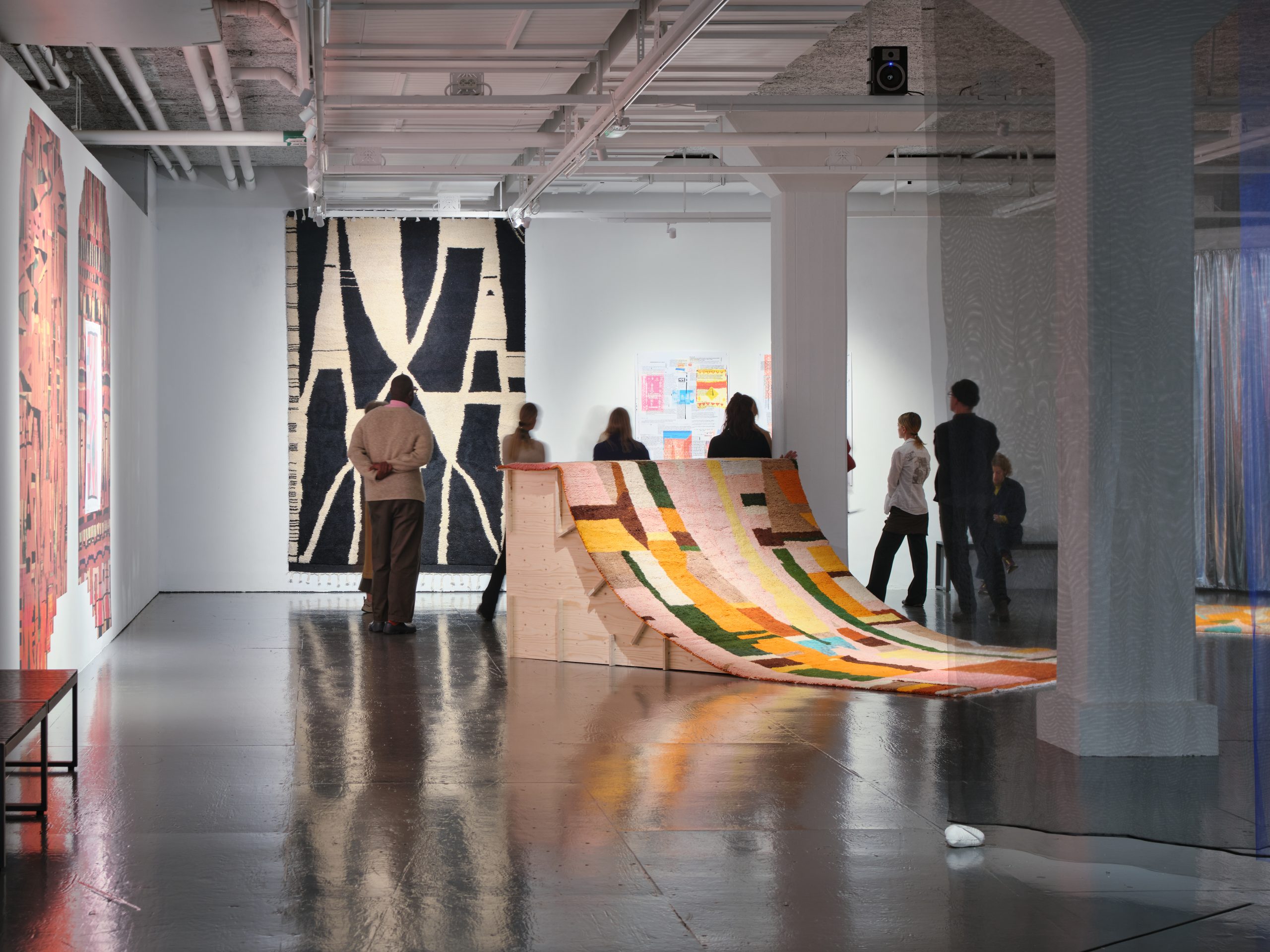
Integrations (Sidi El Mokhtar)
(2020-6)
Integrations departs from five years spent taking the position of a student of the anti-colonial Casablanca Art School (1962–1974) —a pedagogical experiment that refused the hierarchy between art and craft, recentred non-European visual thinking, and worked against the traditional opposition between culture and politics. The artists of the school pursued abstraction as a language for action, re-appropriating it from the notion of it being a twentieth-century western painterly invention. As Toni Maraini wrote: “A lot of attention was given to the signs and symbols, their aesthetic, iconography and history within the Afro-Mediterranean space. (…) A beautiful rural traditional carpet —the work of a woman artisan from the Haouz region— was hung on the wall of the painting class to inspire students. The carpet was friendlily named ‘Klee’s carpet’.”
This question of “Klee’s carpet” brought me back to the Carpet by Klee (Paul Klee, Teppich, 1927, Private collection, used in the bauhaus imaginista project and exhibition), which I used as key: to look at abstraction as space, and to anchor an understanding of abstraction as an ancestral practice of experimentation, documented and therefore mined by what was to be designated as western abstract art. Experimentation with abstraction does not originate from the great, often white and male artists of the 20th century, as most of art history would like us to think, but in craft practices from around the world, usually carried out by women. This research strand should therefore be called: abstraction as women’s labour.
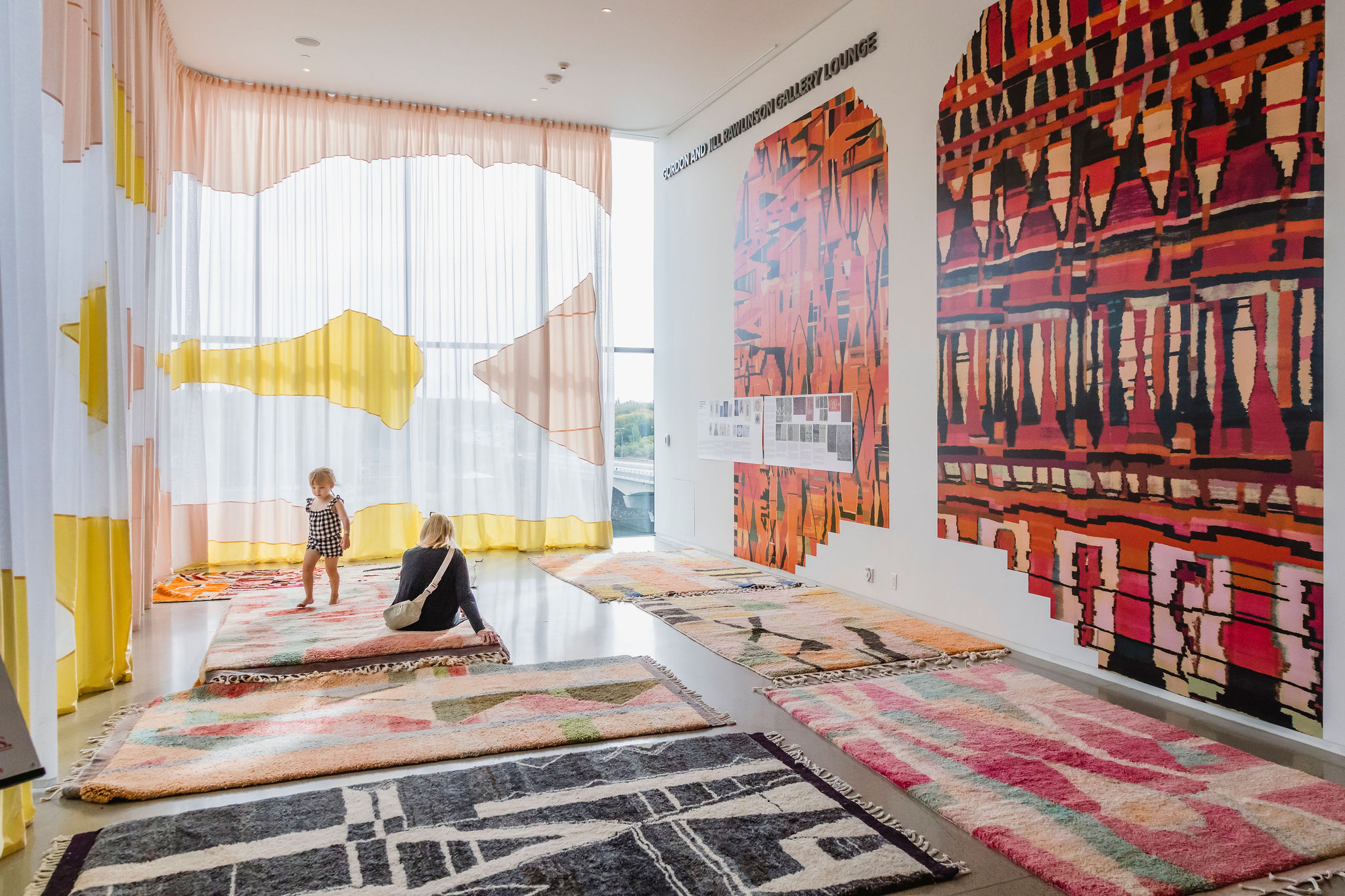
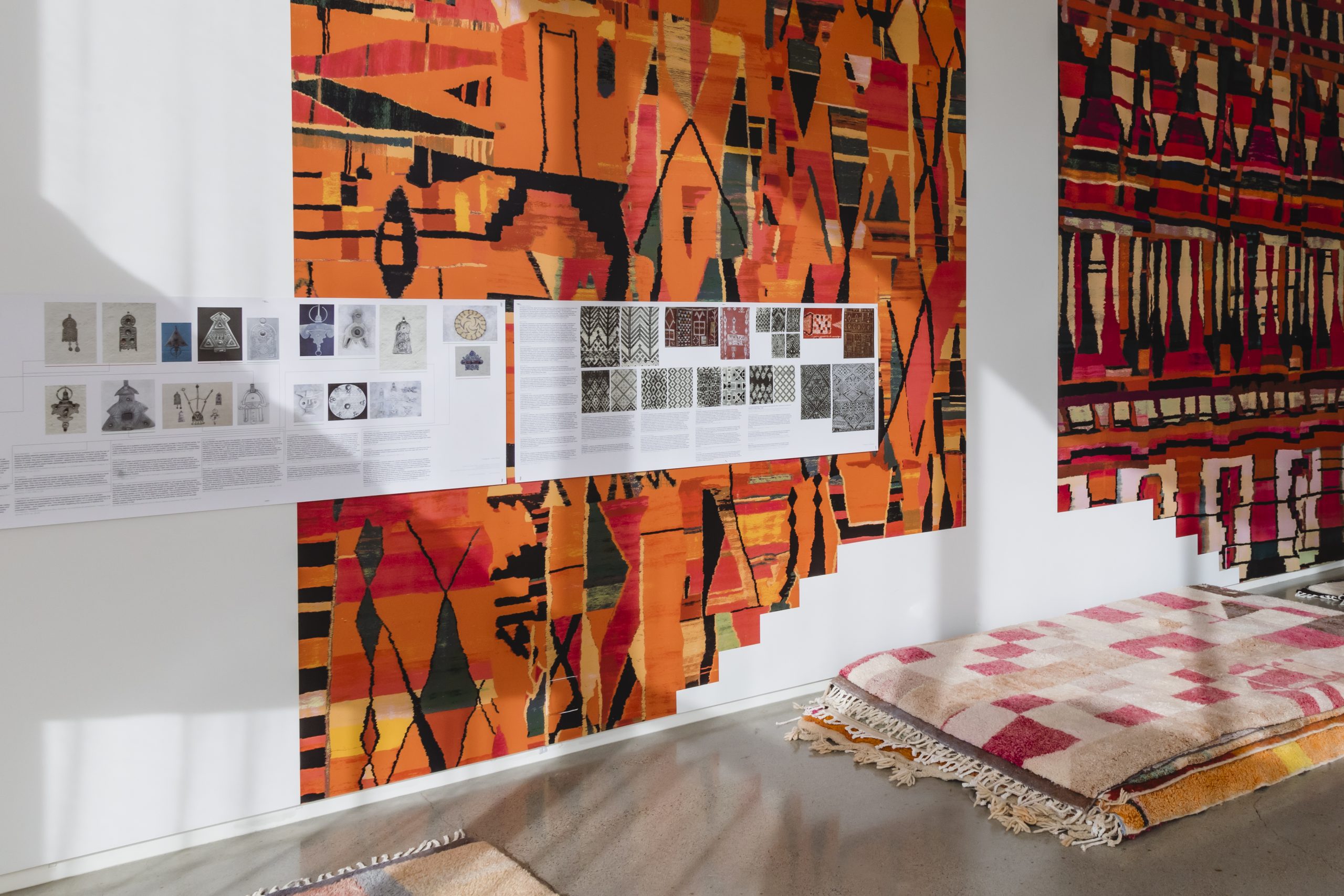
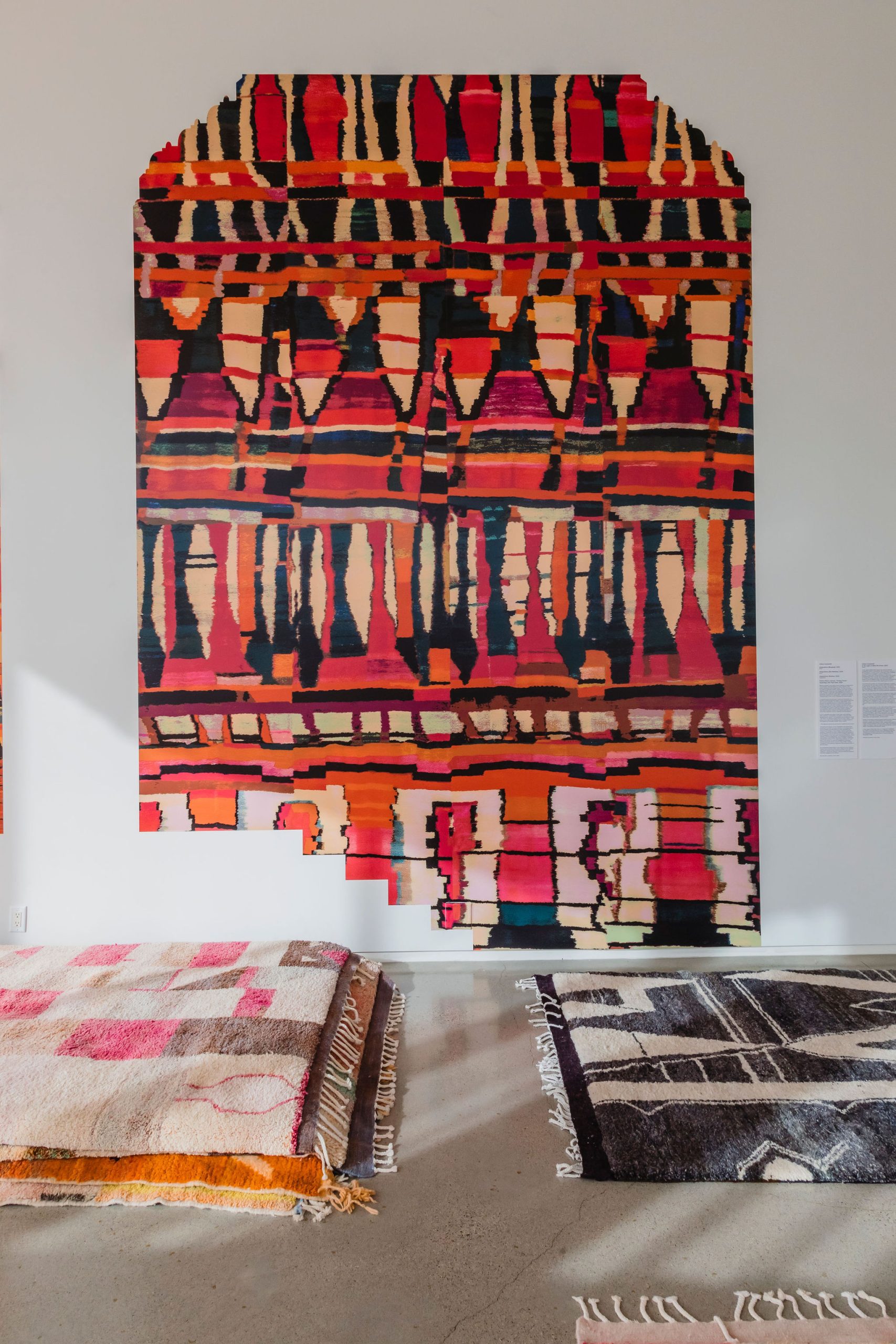
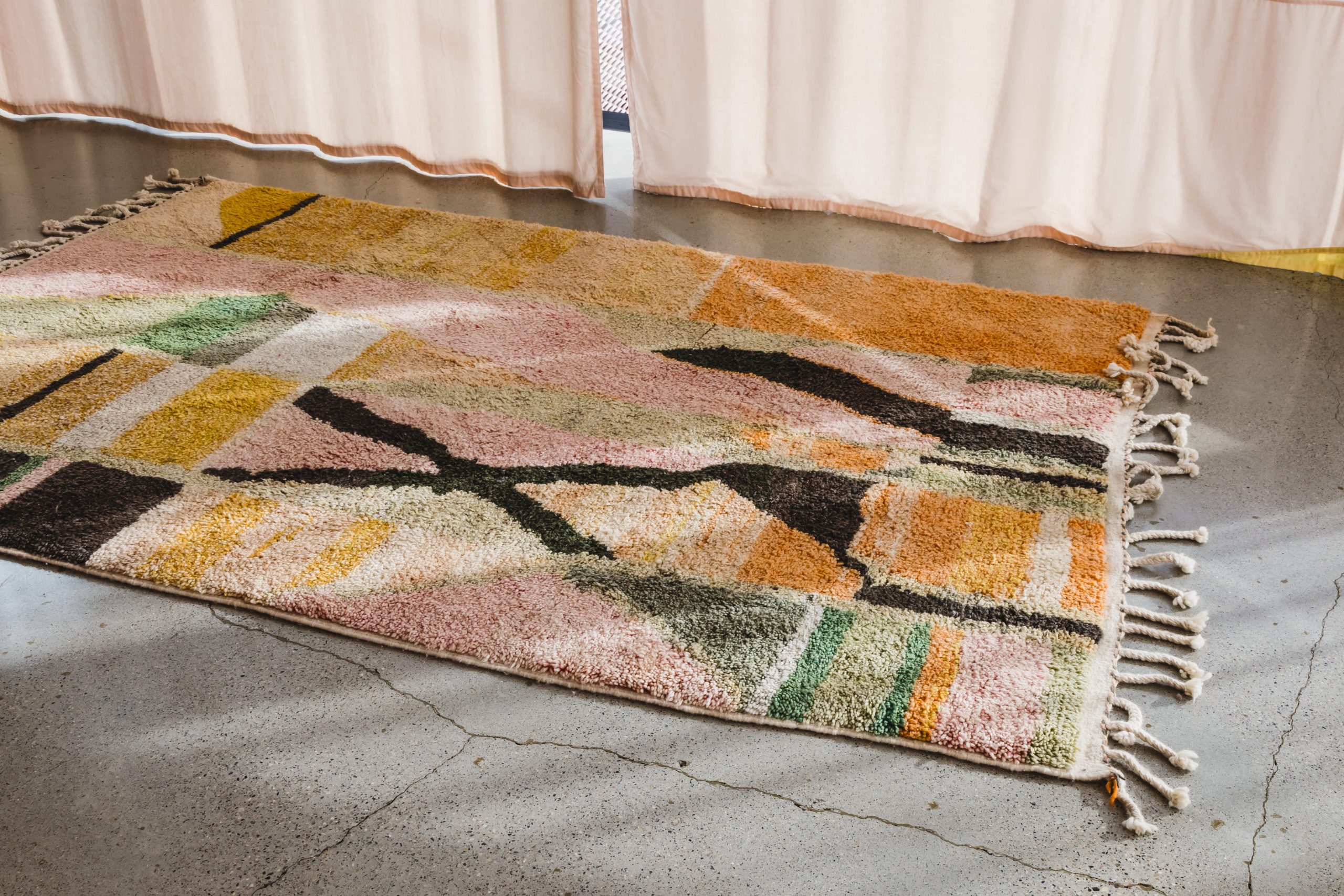
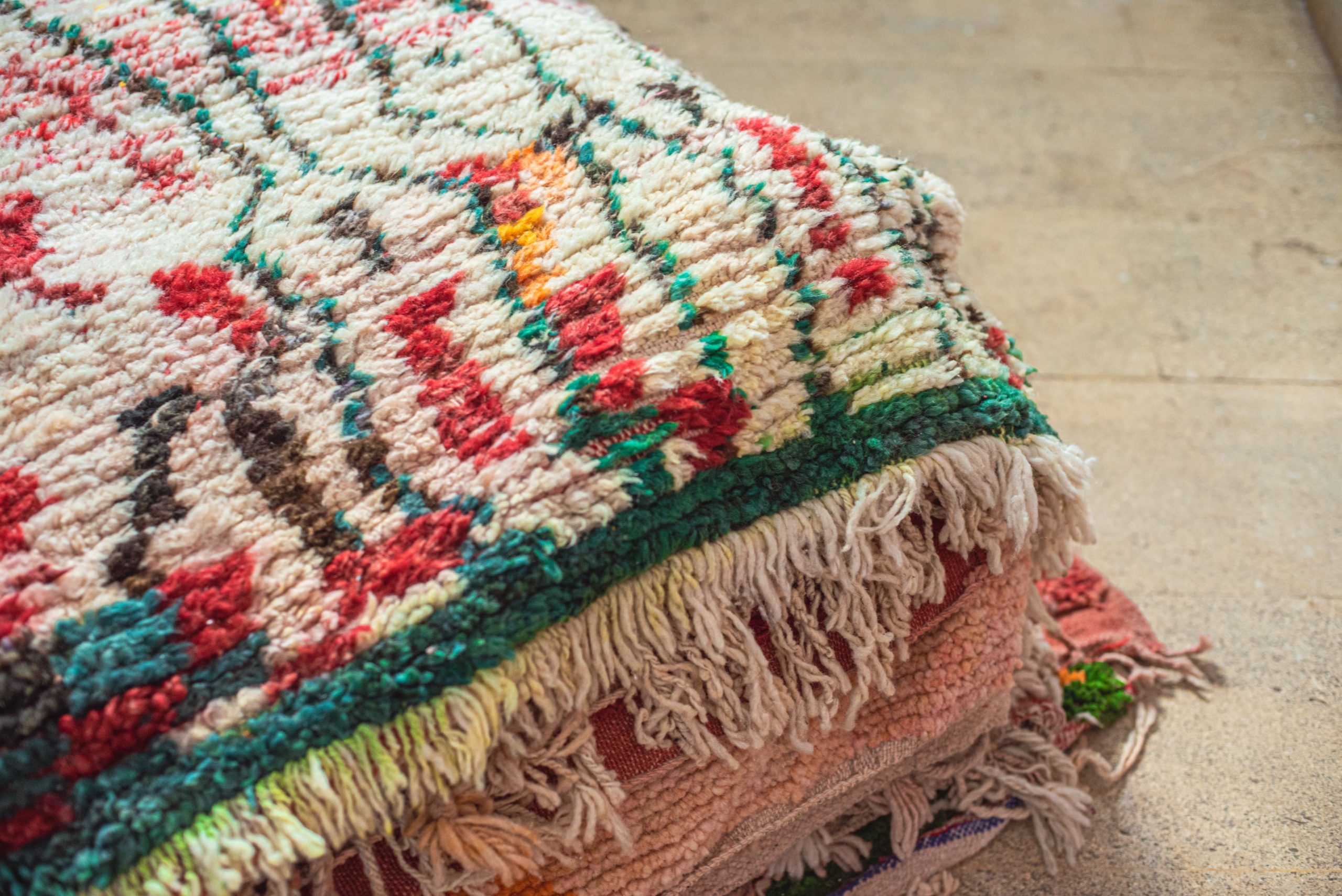
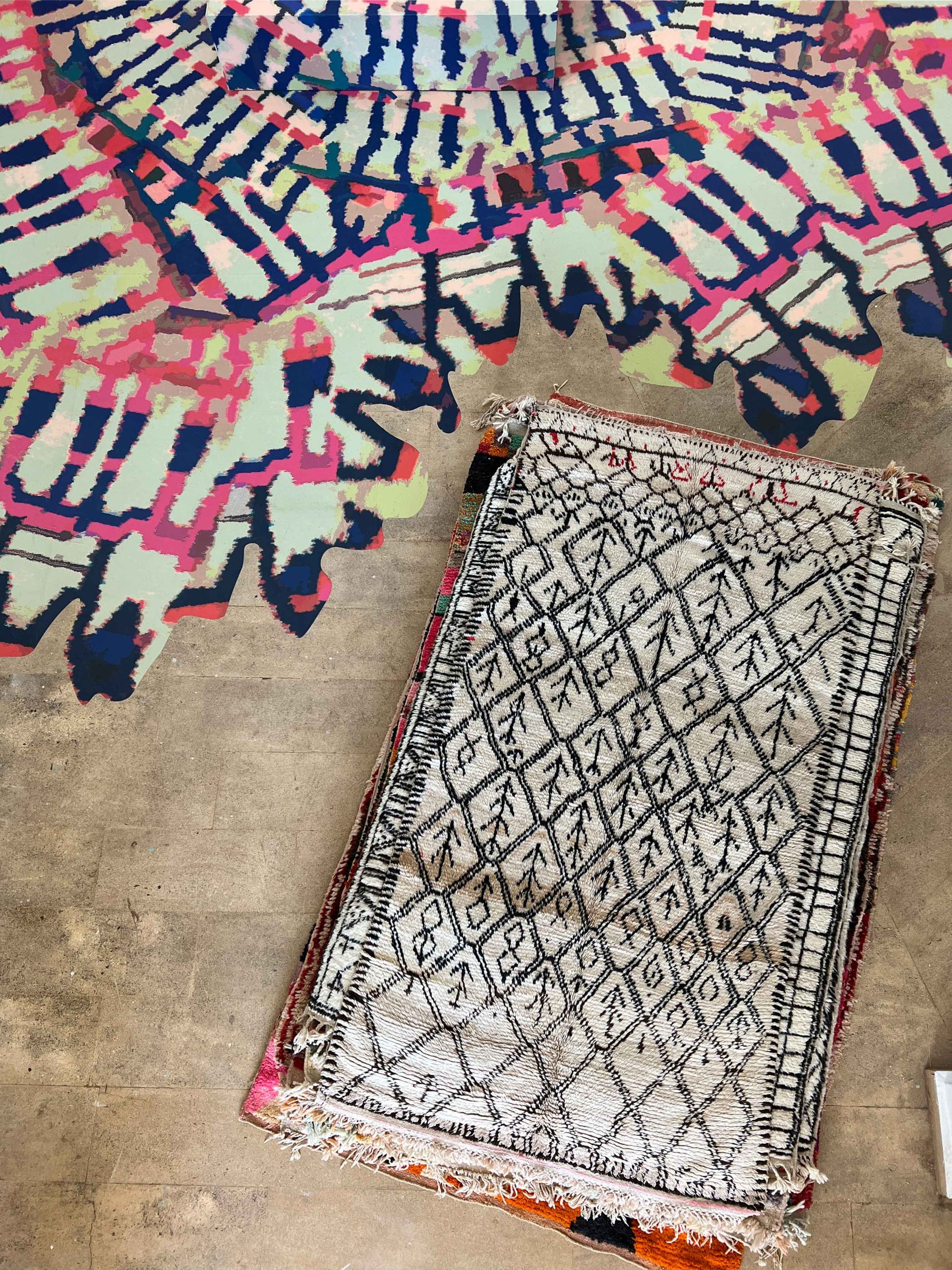
Slowly forming fragments of the school’s legacy into a curriculum led to periods of intermittent travel across Morocco, drawing, photographing, and describing Amazigh carpets. This studying produced The Source: a visual lexicon of recurring forms and colours, fragments of which function as open scores for a women’s weaving cooperative in Sidi El Mokhtar, approximately 100km from Marrakesh.
Honouring the legacy of the Casablanca Art School and reversing a common museum practice of showing textiles as the inspiration for better-known artists in more widely coveted media like painting, the woven carpets are the primary work —made by named women, in a specific place, from specific knowledge. The works are available for purchase, and profit from sales is returned to the cooperative: a small circular economy, and a modest historical correction.
Integrations was framed by the larger project intiated by KW Institute for Contemporary Art (Berlin) and ThinkArt (Casablanca) in partnership with Sharjah Art Foundation, Institut für Auslandsbeziehungen (ifa), Goethe-Institut Marokko, and Zamân Books & Curating. The project draws from the legacy of the Casablanca Art School and its innovative pedagogical methods, modernist aesthetics, and exhibition strategies in 1960s Morocco. Launched in 2020 with a residency program, it continued with an exhibition, which took place at various locations in Casablanca in 2023 – 2024, and at IFA Berlin in 2024.
Integrations has continued and since been shown at Lunds Konsthall and Tensta Konsthall, Sweden, Remai Modern, Canada, and Wesleyan Center for the Arts, USA.